


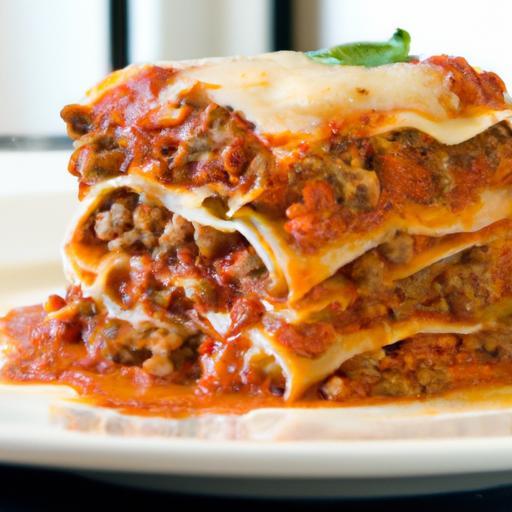
Beneath the golden crust of an Italian lasagna bolognese lies more than just a meal-it’s a tapestry woven from centuries-old traditions, regional pride, and the artistry of slow-cooked flavors. Each layer tells a story: the rich ragù, simmered to perfection with a symphony of meats and tomatoes; the creamy béchamel that cushions every bite with velvety warmth; and the tender sheets of pasta that bind it all together in harmonious unity. In this exploration of “Layers of Tradition: Crafting Authentic Italian Lasagna Bolognese,” we peel back the layers-both literal and cultural-to uncover the essence of a dish that is as much a culinary masterpiece as it is indeed a cherished ritual passed down through generations.Join us as we delve into the heart of Emilia-Romagna’s iconic recipe,revealing the careful craftsmanship and deep heritage that transform simple ingredients into Italy’s beloved lasagna Bolognese.
Layers of Tradition: Crafting Authentic Italian Lasagna Bolognese
Layers of tradition: crafting authentic Italian lasagna Bolognese is more than just a recipe-it is a journey into the heart of Italian culinary heritage. Originating from the rustic kitchens of Bologna, this iconic dish melds savory, slow-simmered meat sauce with tender pasta sheets, creamy béchamel, and layers of cheese, creating a symphony of flavors that have captivated food lovers for centuries.
Origins and Evolution of the Classic Bolognese sauce
Tracing the roots of Bolognese sauce reveals a rich history steeped in simplicity and regional pride. Known in Italy as Ragù alla Bolognese, this sauce was first documented in a recipe from 18th-century Bologna, emphasizing quality ingredients over complexity. Conventional Bolognese is a carefully balanced blend of minced veal and pork, aromatic soffritto of carrot, celery, and onion, a splash of red wine, and a slow, patient simmer that transforms humble components into a deeply flavorful sauce. Over time, this hearty ragù traveled beyond Italy, evolving with each adaptation but always retaining its essence: a slow-cooked, meaty sauce designed to cling perfectly to pasta, especially the wide sheets ideal for lasagna.
Selecting the Perfect Pasta Sheets for Genuine Texture
Authentic texture in lasagna depends heavily on the pasta sheet. Handmade or fresh pasta is preferred, crafted from soft, high-quality durum wheat flour combined with eggs to form supple, elastic sheets. These wide, thin sheets not only create distinct visual layers but also absorb and complement the sauce beautifully. When selecting pasta sheets, aim for those thin enough to cook quickly but durable enough to hold the weight of layers without turning mushy. Fresh sheets tend to yield a silkier bite and showcase the “layers of tradition” in every forkful.
Building the Layers: Balancing Sauce, Cheese, and Béchamel
The magic of classic lasagna lies in its layers-each component playing a crucial role in flavor and texture harmony. Begin with a thin coating of bolognese sauce to anchor the first pasta layer, followed by a gentle spread of velvety béchamel that adds creaminess without overwhelming. Generous grates of Parmigiano-Reggiano offer savory depth, melting delicately between folds. Aim for balance: too much béchamel can mask the sauce, while too little may dry the dish. The ideal assembly showcases alternating ribbons of intense meat sauce, creamy béchamel, pasta, and cheese that meld into a unified crescendo as it bakes.
Tips for Achieving the Ideal Bake and Serving Presentation
Every lasagna deserves a golden, bubbly crown. Bake your masterpiece in a preheated oven at 375°F (190°C) for 35-40 minutes until the top layer of cheese bubbles and offers a light crust with hints of caramelization. Cover with foil for the first half to retain moisture, than uncover to perfect the crust. Allowing the dish to rest for 15 minutes before serving encourages the layers to set, making slicing neat and presentation inviting.
For serving, a simple garnish of fresh basil leaves and a light drizzle of high-quality extra virgin olive oil brighten the visual and flavor profile. Pair with a crisp green salad or sautéed seasonal vegetables for a balanced meal.
prep and Cook Time
- Preparation: 40 minutes (includes sauce prep and pasta handling)
- Cooking: 3 hours 20 minutes (slow simmering + baking)
- Total: Approximately 4 hours
Yield
- Serves 8 generous portions
Difficulty Level
- Medium to Advanced – Best suited for cooks who relish slow, patient cooking and assembling layered dishes with finesse
Ingredients
- for the Bolognese Sauce:
- 2 tablespoons extra virgin olive oil
- 1 small carrot, finely diced
- 1 celery stalk, finely diced
- 1 small onion, finely chopped
- 3/4 lb (350g) ground veal
- 3/4 lb (350g) ground pork
- 1 cup whole milk
- 1 cup dry white wine
- 28 oz (800g) canned San Marzano tomatoes, crushed
- Salt and freshly ground black pepper, to taste
- For the Béchamel sauce:
- 4 tablespoons unsalted butter
- 1/4 cup all-purpose flour
- 4 cups whole milk, warmed
- Pinch of freshly grated nutmeg
- Salt and white pepper, to taste
- Assembly:
- 12-15 fresh pasta sheets (or no-boil sheets)
- 1 1/2 cups freshly grated Parmigiano-Reggiano cheese
Instructions
- Prepare the Bolognese Sauce: Heat olive oil in a heavy-bottomed pot over medium heat. Add carrot, celery, and onion, sautéing until softened and golden, about 7 minutes. Stir occasionally to prevent sticking.
- Add the ground veal and pork, breaking it apart with a wooden spoon. Cook until browned, approximately 10 minutes. Drain any excess fat if necessary.
- Pour in the milk and simmer gently, stirring frequently, until it evaporates (about 20 minutes).This step tenderizes the meat and mellows its flavor.
- Deglaze with white wine, letting it reduce for 10 minutes. Then add crushed tomatoes, salt, and pepper.
- Reduce heat to low and simmer uncovered for 2 hours, stirring occasionally. The sauce should thicken slowly, with flavors fully developing.
- Make the Béchamel Sauce: In a saucepan, melt butter over medium heat. Whisk in flour and cook gently for 1-2 minutes without browning.
- Gradually add warmed milk, whisking constantly to avoid lumps.Cook until the sauce thickens to a creamy consistency, about 8 minutes.
- Season with salt, white pepper, and a pinch of nutmeg. Remove from heat and keep warm.
- Assemble the Lasagna: Preheat oven to 375°F (190°C).Lightly grease a deep baking dish.
- Begin with a thin layer of Bolognese sauce on the base. Arrange pasta sheets to cover.
- Spread a layer of béchamel over the pasta, followed by a generous sprinkle of Parmigiano-Reggiano.
- Repeat the layering: sauce, pasta, béchamel, and cheese. Finish with a top layer of béchamel and cheese.
- Cover loosely with foil. Bake for 20 minutes, then remove foil and bake an additional 20 minutes to brown the top.
- Remove from oven and let rest for 15 minutes before slicing and serving.
Tips for Success
- Use fresh, high-quality ingredients for the most authentic flavor-specifically fresh pasta sheets and Parmigiano-Reggiano.
- Simmer the Bolognese sauce slowly. Patience is key to developing the deep, rich flavors that embody this dish.
- If pressed for time, prepare the sauce a day ahead; the flavors mature beautifully overnight.
- For a lighter béchamel, substitute half the milk with cream, but beware of overpowering the savory sauce.
- Letting the baked lasagna rest is crucial for clean slices and enhanced melding of flavors.
Serving Suggestions
Serve this hearty lasagna with a refreshing side of peppery arugula salad dressed in lemon vinaigrette. Garnish each slice with fresh basil leaves and a final dusting of Parmigiano-Reggiano for an elegant touch. Pair with a medium-bodied red wine such as a Sangiovese or Chianti for a truly authentic Italian experience.

| Nutrient | Per Serving |
|---|---|
| Calories | 520 kcal |
| Protein | 32 g |
| Carbohydrates | 40 g |
| Fat | 22 g |
For those eager to explore more Italian classics, consider trying our detailed guide on Traditional Italian Ragù Sauce. To deepen your understanding of authentic Italian pasta-making techniques, the Accademia Italiana della Cucina offers rich resources and historical insights.
Q&A
Q&A: Layers of Tradition – Crafting Authentic Italian Lasagna Bolognese
Q1: What makes Lasagna Bolognese different from other types of lasagna?
A1: lasagna Bolognese is a harmonious symphony of flavors rooted in the Emilia-Romagna region of Italy.Unlike some cheesy or vegetable-heavy versions, this classic lays emphasis on a rich ragù alla Bolognese-slow-cooked ground meats mingling with tomatoes, wine, and aromatic vegetables-paired with velvety béchamel sauce and fresh pasta sheets. It’s a festivity of balance: hearty yet refined, rustic yet elegant.
Q2: Why are fresh pasta sheets important in an authentic lasagna Bolognese?
A2: Fresh pasta sheets bring a tender,silky texture that dried pasta simply can’t replicate. Made from simple ingredients-flour and eggs-they soak up the ragù and béchamel perfectly without losing their structure. This freshness maintains the integrity of each layer, allowing flavors to meld seamlessly and delivering that melt-in-your-mouth experience treasured in traditional Italian kitchens.
Q3: Can you describe the ragù alla bolognese and how it’s prepared?
A3: Ragù alla Bolognese is the soul of the dish. It’s a slow-simmered carnivorous concoction typically made from minced beef and pork, soffritto (onion, carrot, celery), a touch of pancetta, tomato paste, milk or cream, and a splash of white or red wine. Patience is key-cooking it low and slow (often two hours or more) draws out deep,layered flavors,tenderizes the meat,and transforms humble ingredients into a luxurious sauce.
Q4: What role does béchamel sauce play in this layered masterpiece?
A4: Béchamel sauce is the silk-thread weaving through the lasagna’s tapestry. Made from butter,flour,and milk,it adds creamy richness,balancing the savory ragù with gentle sweetness and a luscious mouthfeel. It also prevents the pasta from drying out during baking, ensuring each bite is moist and creamy without overwhelming the other elements.
Q5: How many layers of pasta,ragù,and béchamel are traditional?
A5: Tradition frequently enough calls for four to five layers,beginning and ending with pasta sheets to encase the filling beautifully. Between these layers, ragù and béchamel alternate in generous but balanced amounts, crafted to create that visually appealing stratification and a perfect bite every time-a harmonious layering that echoes the patience and love put into making the dish.
Q6: Is Parmesan cheese necessary in authentic Lasagna Bolognese?
A6: yes, Parmigiano-Reggiano is the quintessential finishing touch. Its nutty, salty sharpness enhances the complex flavors of the ragù and béchamel, while adding subtle texture. It’s traditionally sprinkled over the top just before baking and sometimes stirred into the layers, elevating the dish from comfort food to something truly sublime.
Q7: Can Lasagna Bolognese be made ahead and frozen?
A7: Absolutely-it’s actually recommended! Lasagna’s flavors deepen after resting, making make-ahead and freezing a practical and flavorful strategy. Just assemble the layers, cover tightly, and freeze before baking. When ready, thaw slowly in the refrigerator, then bake until bubbling and golden. This method is favored by many Italian families, combining tradition with convenience.
Q8: What’s the best wine pairing for Lasagna Bolognese?
A8: A classic pairing is a robust red from Italy’s Emilia-Romagna region,like a Sangiovese or Lambrusco. These wines’ acidity cuts through the creamy béchamel and luscious meat sauce, refreshing the palate. Alternatively, a medium-bodied Chianti or Barbera offers fruity notes that complement the ragù’s savory depth without overpowering this layered delight.
Q9: how can home cooks capture the essence of tradition when making lasagna Bolognese?
A9: Embrace patience, fresh ingredients, and balance. From crafting your own pasta sheets to lovingly simmering ragù and gently stirring béchamel, every step honors the heritage of Emilia-Romagna. Don’t rush the process-each layer tells a story of care,culture,and culinary craft. Invite family or friends to share the journey; after all, authentic lasagna is best enjoyed together around the table.
Q10: why does Lasagna Bolognese remain a beloved culinary icon after centuries?
A10: Because it embodies the soul of Italian cooking-simplicity elevated by technique, fresh ingredients transformed through time, and above all, a celebration of togetherness.Each rich layer of meat, creamy sauce, and tender pasta speaks to tradition and innovation, making it a dish that comforts, delights, and connects generations, bite after unforgettable bite.
In Summary
As each carefully crafted layer of rich ragù, creamy béchamel, and tender pasta folds into the next, the story of Italian heritage unfolds on your plate. Lasagna Bolognese is more than a meal-it is indeed a tapestry woven from time-honored recipes, regional pride, and the loving hands of generations past. By honoring these layers of tradition, you do more than create a dish; you keep alive the spirit of Italy’s culinary soul, one hearty, savory slice at a time. So next time you lift your fork, savor not just the flavors, but the history and heart that make authentic lasagna Bolognese an enduring masterpiece.